How to Find the Shopify Variant Driving Product Returns
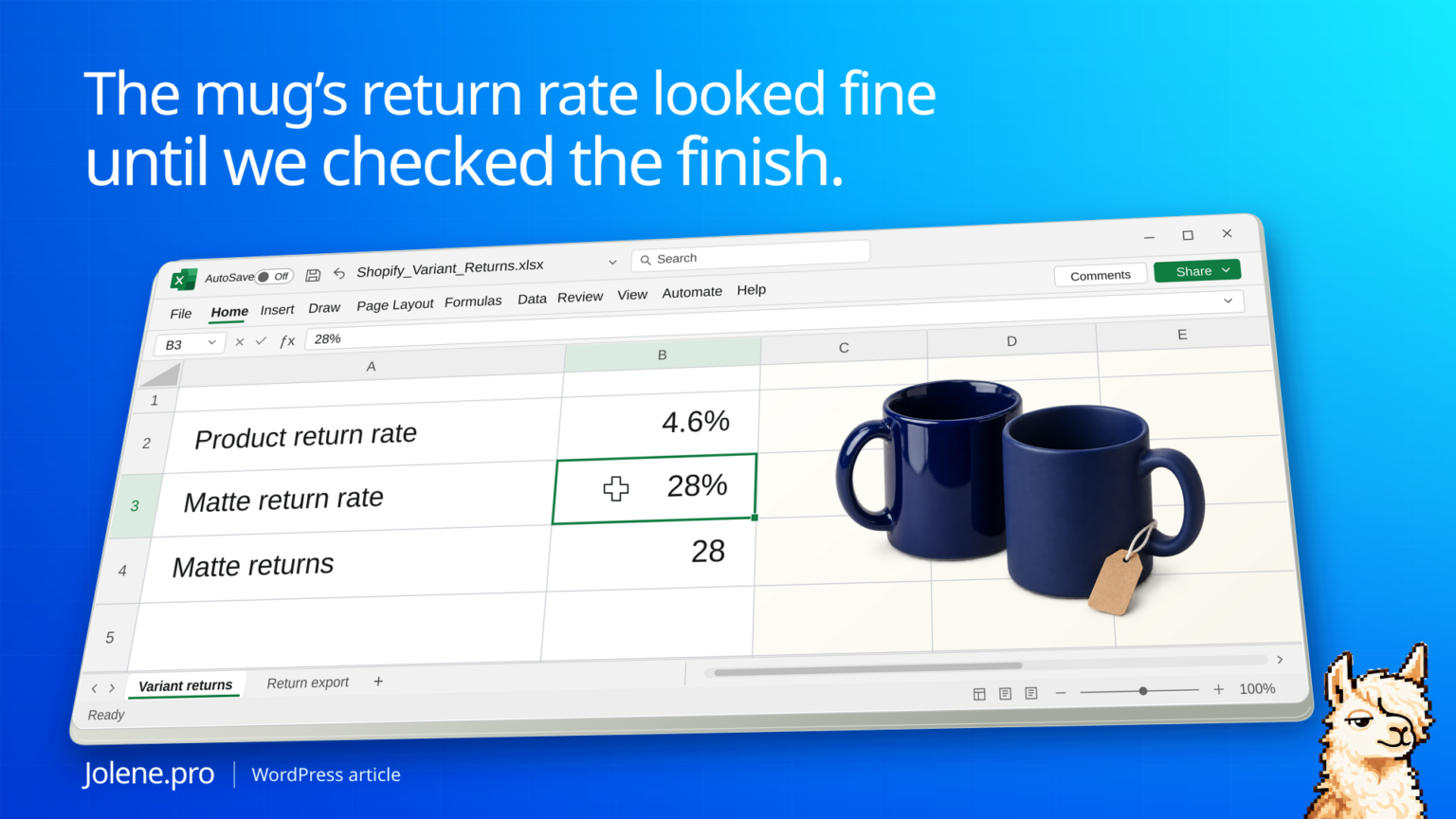
The ceramic mug’s return rate is 4.6%. That sounds manageable until you open the variant report. The matte finish is driving most of the returns, and the reason notes are almost all about the lid.
Compare returned quantities with sold quantities by variant for the same sales cohort. Allow the same return window for each variant before comparing rates, and keep return reasons beside the counts.
One product total, two return rates
These 1,000 units were sold in the same period and had the same time to be returned.
| Variant | Units sold | Units returned | Return rate |
|---|---|---|---|
| Gloss | 900 | 18 | 2.0% |
| Matte | 100 | 28 | 28.0% |
| Product total | 1,000 | 46 | 4.6% |
Matte accounts for 28 of the 46 returns on just 100 sales. If 22 matte units cite a loose lid, the merchandiser has a specific SKU and issue to send to the supplier.
Match returns to the original sale
Use the original order-line ID or a verified mapping from return line to original variant. Pull sale date, sold units, returned units, return reason and variant identifier. A refund can exist without a physical return, so specify what counts in this report.
Use a mature and consistent comparison window
Filter to sales old enough to have the defined return window. Group by variant, then divide returned units by sold units. Keep the denominator visible and flag low-volume variants before ranking them. Compare the reason mix only where source data is available.
Find the first SKU that needs a review
Keep the product, variant and order-line source rows so someone can inspect the pattern in the original returns.
Which variants account for most returned units and have an unusually high return rate among mature sales? Show units, rates, reasons and source rows.
Review the matte variant’s lid complaints before deciding whether to change the listing, check a batch, or raise the issue with the supplier.
Shopify sales reports and return reasons
The figures and identifiers in this example are synthetic. The displayed arithmetic was checked independently. A live Jolene.pro result could not be verified.
Try this with your own spreadsheet at Jolene.pro. Follow Jolene.pro on LinkedIn for more spreadsheet guides.
For more checked examples, see Jolene.pro Workbook Studies.