Which paid Shopify orders still need a downstream acknowledgment?
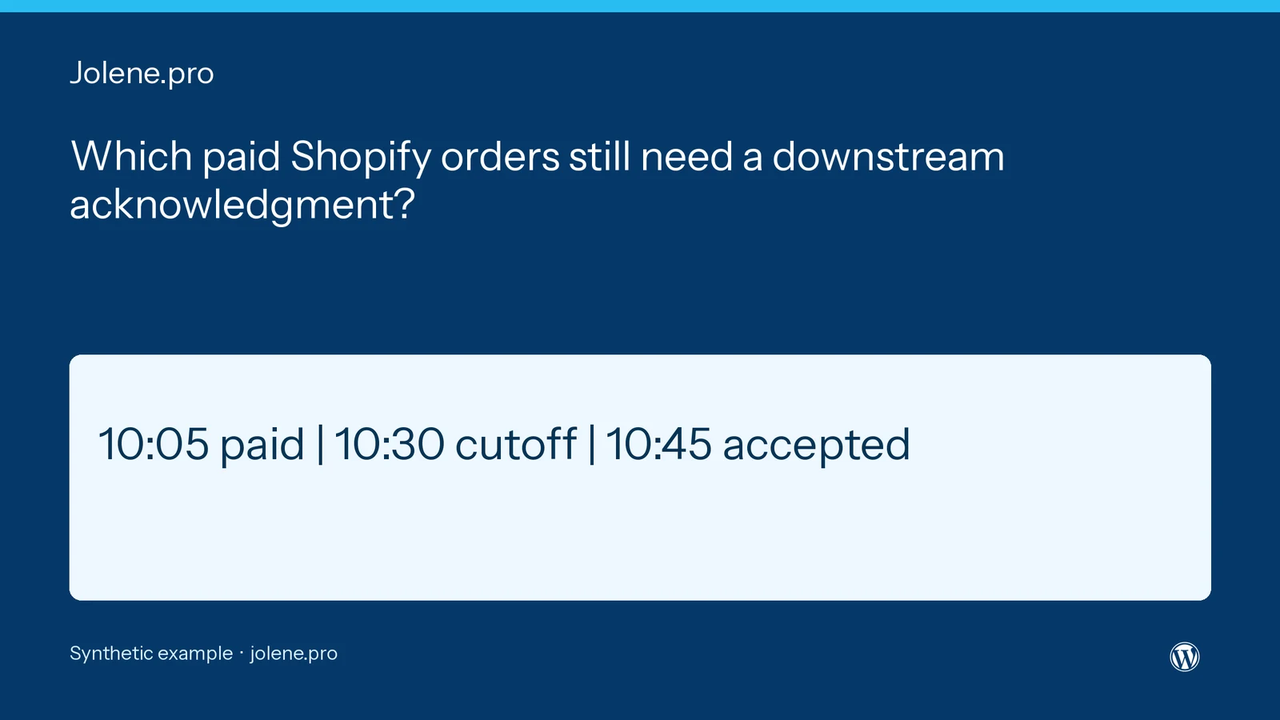
At the fictional 10:30 cutoff, O1 is the one paid order without a timely acknowledgment. O2 was accepted, O3 has no paid time and O4 paid after the cutoff.
This example uses synthetic records and was independently checked. A live Jolene.pro result for these exact rows remains unverified.
Copy the example records
Copy each table to its named worksheet with row 1 as headers. Keep the original records alongside the comparison.
Orders!A1:C5
| Order | Created | Paid |
|---|---|---|
| O1 | 09:40 | 10:05 |
| O2 | 09:42 | 09:55 |
| O3 | 09:45 | (blank) |
| O4 | 09:50 | 10:40 |
Ack!A1:B3
| Order | Accepted |
|---|---|
| O2 | 10:12 |
| O1 | 10:45 |
Run the records check
Keep a common timezone and one shop-plus-order key. Compare an authoritative paid timestamp with the receiving system's accepted timestamps by cutoff. Orders!A2:C2 and Ack!A3:B3 explain why O1 was eligible and still open at 10:30. Treat an incomplete receiving extract as unresolved and review before any replay.
Use the order's internal ID wherever available and retain shop identity. Exported line items can repeat order fields or leave them blank. Build one supported order record before joining acknowledgments. Keep the date as well as the time. This example uses one common date and time zone. A receiving acknowledgment establishes acceptance by that system, and requires a documented status meaning.
Review exceptions before closing
A practitioner reports orders can become paid after an export window. Replies discuss tagging changed orders. The example checks the receiving record independently of any proposed automation. Shopify practitioner question · Shopify export help · Matrixify order documentation.
Retain the reporting period, match keys, missing records and source row references with the result. Repeat the check after confirming corrections in the original system.